
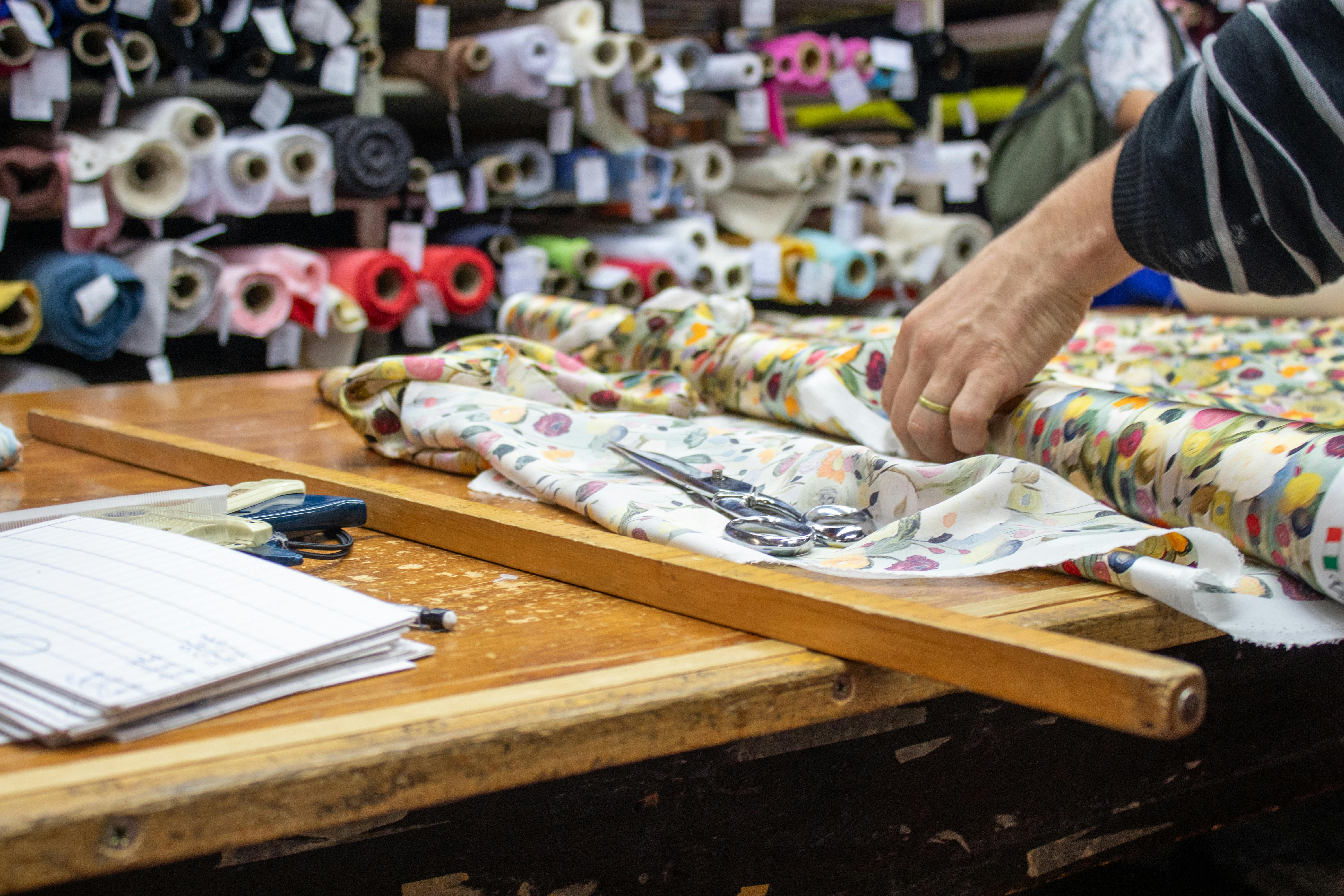
Craftsmanship, design and luxury: a heritage that strengthens competitiveness
Campania stands out as a singular case of excellence in the Made in Italy fashion and design-oriented sector.
Extraordinarily rich and diverse in its supply chains, it is a reality with a strong identity, shaped by cultural, commercial and expressive links with the Mediterranean. In this sense, Made in Italy in Campania takes on a distinctive character that enriches Italy’s productive qualities through its particular identity, in which no rigid categories exist: art, cultural heritage, ancient craft knowledge, creativity, architecture and applied arts blend into everyday life and its productions, giving rise to a scenario where life and its expressions are the result of a cultural process embedded in productive know-how.
The fashion sector, which involves around 22,000 companies, refers to a very long and articulated supply chain of highly specialised small and medium-sized enterprises.
The TAC supply chain – Textile, Apparel, Footwear (also including sectors such as tanning, accessories, jewellery, eyewear and cosmetics) is also highly differentiated in terms of productivity; in this context, high-end craftsmanship represents a reality that is particularly well suited to luxury brands.
A closely connected ecosystem, characterised by the presence of historic districts (recognised internationally) such as Naples, Aversa, Caserta and Nola, which express productive know-how capable of combining manufacturing quality, new technologies and materials, artisanal processes and creativity.
An integrated system that is particularly attractive for investments in the premium and luxury segments.
The territorial concentration in certain areas gives rise to true specialised and collaborative centres of excellence, as is the case for Avellino (tanneries and leather processing), Aversa (footwear), Marcianise (goldsmithing), Caserta (textile, silk weaving) and Naples (apparel).
Also significant is the presence of major logistics and distribution hubs.
As regards the design-oriented productive sector, Campania’s wood-furniture supply chain consists of a majority of wood-sector companies, employing more than 6,000 people, followed by the furniture and lighting sectors; specifically, 61% of turnover is generated by the wood sector, 37% by the furniture sector and 2% by the lighting sector.
Campania exports around 18% of the total production of the supply chain; the sector with the highest share of exports is furniture, with 23%, worth 62 million euros. The main export destinations in this case are France, the United States and Germany.
For the wood sector, the main destinations are Spain, Germany and the United States. Campania also exports to Japan, where it accounts for around 20% of total Italian exports; lighting-sector products are mainly exported to Slovakia, the Czech Republic and France (source: FederlegnoArredo Research Centre).
Highlights

Integrated fashion ecosystem: evolution from historic districts to a collaborative regional supply chain, export-oriented and serving fashion and luxury, with a leading role for the D.O.R. Campania goldsmithing district and the Mo.Cam. enterprise network.

Advanced training and research: the training ecosystem in design and fashion is significant, ranging from regional academies to PhDs, including the National PhD "Design for Made in Italy", and is supported by a network of research centres such as SSIP, Officina Vanvitelli and the Apple Academy

Interporto di Nola as a logistics hub: a central point for production, flow consolidation and international operators

Mo.Do. C.: the Regional Fashion and Design Roundtable was established under the POR Campania FSE 2014–2020 programme with the aim of strengthening the quality of strategies and governance of the Campania Fashion System, improving its global competitiveness from a social, environmental and technological sustainability perspective

Cultural heritage and historic companies: the regional territory hosts numerous historic companies in goldsmithing, coral and cameo crafting, clothing and artisan tailoring. The Fashion Museum — Fondazione Mondragone has ancient roots and testifies to the excellence of the region’s craftsmanship and historic brands

Specialised workforce: a strong artisan tradition consolidated over time, with historic brands, high-end workshops and training institutions

Meet Italian Brands-MIT: an international fashion event dedicated to fashion in its various expressions – from established brands to excellence production under customer labels – aimed at foreign operators wishing to distribute Made in Italy products in their territory